
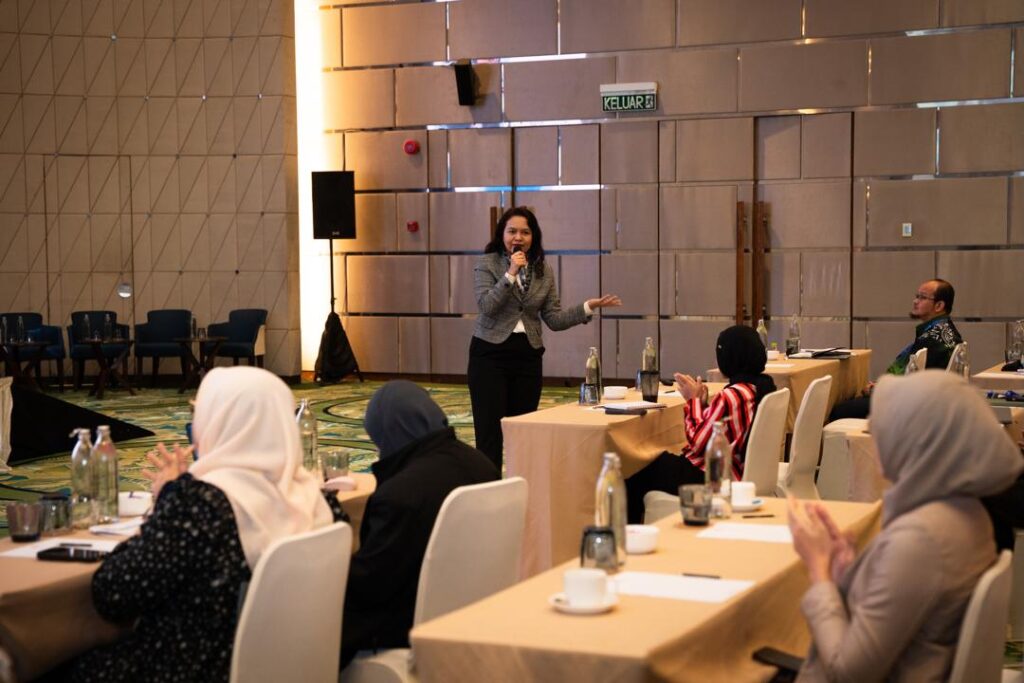
KUALA LUMPUR, 29 Apr 2026 – Many organisational failures today are not caused by poor planning, but by communication breaking down under pressure, as organisations struggle to keep pace with real-time reactions in an increasingly AI-driven environment.
Strategic communications and project management specialist Zuraida Malek of Zeta M Consulting said the rules governing communication have shifted, with responses now shaped continuously by stakeholders, platforms and public perception.
“We are no longer operating in the communication environment we knew even a few years ago,” she said at the Connect & Influence 2026: Corporate Communications in a Shifting World held on 22 April 2026.
The shift comes as Malaysia’s project-driven economy continues to expand. According to the Malaysian Investment Development Authority (MIDA), 8,390 projects were approved in 2025, with investments totalling RM426.7 billion, up 11 per cent from RM384.4 billion in 2024, and expected to create 244,902 jobs.
As projects become more central to growth and competitiveness, Zuraida said communication must move beyond a support function and be treated as a leadership capability that enables alignment, builds confidence and supports faster decision-making.
She pointed to recurring structural issues, including slow decision-making, siloed communication and multiple approval layers, as key reasons organisations falter when under pressure.
“Most initiatives do not fail because of poor planning alone. They fail because communication collapses under pressure,” she added.
To address this, she outlined the Zeta M Communication Agility Matrix, which identifies five key dimensions: situational awareness, stakeholder intelligence, message calibration, emotional regulation and strategic influence, aimed at enabling more effective real-time alignment and decision-making.
While artificial intelligence can enhance speed, analytics and content generation, she said it does not replace human judgement or credibility.
“Technology can accelerate outcomes, but leadership is still required to read context and respond with humanity,” Zuraida said.
She noted that the next phase of the profession lies in what she described as perception leadership, where communication plays a central role in shaping trust and influence.